
A front door says a lot before it says anything. It greets guests. It guards against wind and rain. It holds the line against break-ins and draughts alike. For something we open and close every day without thinking, it’s a surprisingly intimate part of a home.
But choosing a new one? That’s where things get complicated.
Do you go for the warmth of timber, the practicality of composite, or the strength of steel? The right decision isn’t just about looks or price, it’s about where you live, how you live, and what you need your door to do.
This isn’t a side-by-side product chart. It’s a conversation about trade-offs. Because while every door makes promises, only the well-chosen ones keep them.
Fast Answers First: Which Material Might Suit You?
Every home has its quirks. So instead of chasing “the best” front door, it’s more helpful to ask: what matters most in my day-to-day?
Wood works best in homes that value character, detail, and history, especially when the owners are willing to give a little back in care.
Composite is a strong all-rounder: low maintenance, weather-tough, energy-efficient, and available in just about every style under the sun.
Steel doesn’t try to charm, it shows up for homes where resilience matters. Side doors, back entries, rental properties, or anywhere that’s taken a hit in the past.
A Quick Gut-Check Quiz
What’s your top concern?
- I want to feel safe → Steel (runner-up: PAS 24 composite)
- I want a door I don’t have to think about → Composite (runner-up: steel with powder coat)
- I want my home to feel like it has history → Wood (runner-up: high-end composite with woodgrain finish)
- I want warmth without the drafts → Composite (runner-up: well-sealed timber)
- I want to spend once and forget about it → Composite or steel, depending on location
- I live near the coast → Composite or marine-grade steel
What Makes a “Good” Door, Beyond the Material
Here’s the hard truth: the material is only half the story. A stunning timber door with a weak lock and a gappy frame is a liability. A cheap composite, badly installed, won’t insulate or secure you.
Security: Forget the Word “Strong”
A door’s security isn’t about how solid it feels, it’s about how it’s built and how it’s tested.
In the UK, PAS 24 certification means a doorset (door, frame, hinges, lock, seals) has been tested for forced entry. Look for this first, especially if you’re in a vulnerable area.
The Secured by Design label takes this further, backed by UK police, it recognises doorsets that meet a full suite of security standards, including lock types like TS007 3-star cylinders.
Insulation Isn’t Just Foam
You’ll see U-values quoted everywhere, and they matter. But draught-proofing comes down to:
- A proper fit
- Compression or brush seals
- Threshold design
- Whether the installer spends time getting it right
Aesthetics and Durability
A beautiful door that warps in its first winter isn’t much use. Your local climate plays a role:
- South-facing doors get more UV, coatings matter
- Coastal doors need corrosion resistance
- Shaded spots need mould/mildew resilience
Spec checklist to take to any quote
- PAS 24 or SBD certification?
- Lock type (ideally TS007 3-star cylinder)
- Draught seal quality
- Door finish and warranty
- Installer accreditation
- Frame/hardware materials
- Thermal break (steel)
- Aftercare instructions
- Edge protection (composite)
- Adjustability (hinges, latch tension)
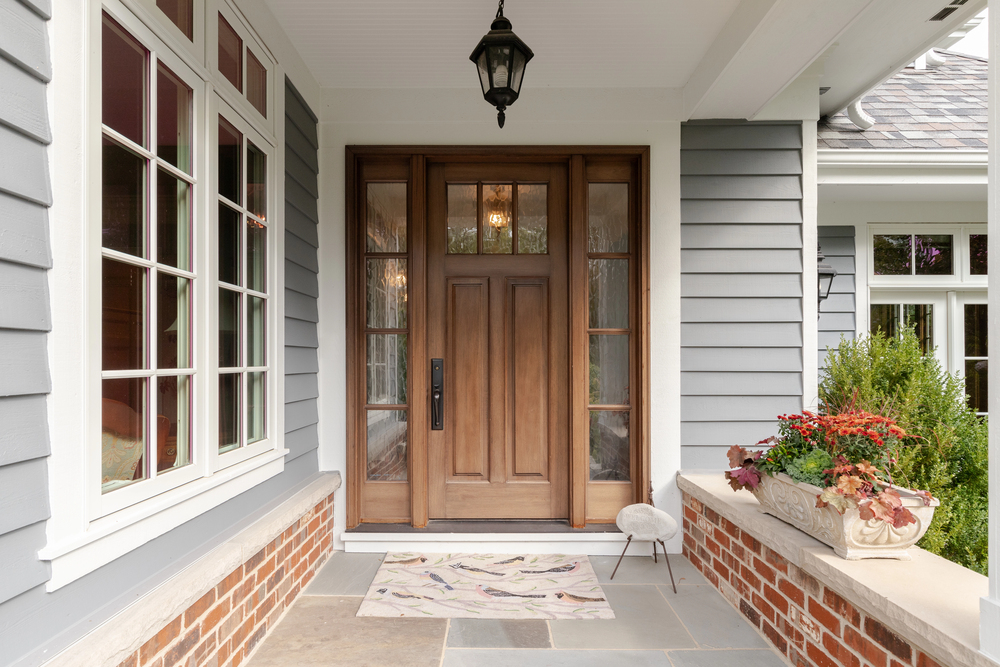
Timber (Wood) Doors: Tradition With Temperament
Stand in front of a good timber door and there’s a presence to it, a sense of age, of care, of a home that’s been lived in. You feel the grain, the slight weight shift as it swings, the way it rests in the frame.
Why People Still Choose Wood
- Aesthetics: No faux finish truly replicates the real thing.
- Repairability: Wood can be sanded, filled, refinished, even reinvented.
- Heritage Fit: In conservation zones or period properties, it may be the only option.
Where It Fights Back
- Timber expands and contracts with the seasons. If unsealed, it warps.
- Paint needs regular checking, every 2–3 years in exposed locations.
- Bottom edges, water ingress points, and joints are all common failure zones.
When It Works Best
- Behind a covered porch or canopy
- When the owner is proactive about upkeep
- In homes where the door is part of the architectural identity
Maintenance Reality
- Repaint every 3–5 years (or when the surface loses sheen)
- Inspect the base rail for bubbling, cracking, or green streaks
- Re-seal exposed joints with paint or sealant as needed
Timber doors aren’t fragile, but they do need attention. For some, that’s part of the charm. For others, it’s a deal-breaker.
Composite Doors: The All-Rounder With Layers
The name “composite” covers a spectrum, but the idea is simple: combine materials to get the best of each. Most UK composite doors use a mix of GRP (glass reinforced plastic) outer skins, foam or engineered timber cores, and a reinforced internal frame.
What Makes Them Appealing
- Low upkeep: No repainting, no swelling, no sanding.
- Weather toughness: Designed for British rain, sleet, and sun.
- Insulation: Many models have strong U-value performance.
- Design choice: Wood-look textures, colours, glazing options galore.
What’s Less Obvious
- The outer skin can still crack if struck hard (especially on cheaper units).
- Edges can wear down over time if exposed to constant rain.
- Hardware (hinges, letterboxes, handles) varies hugely in quality.
- Some doors use foam cores that compress or deform with age.
What to Ask Before You Buy
- Is the core solid timber, hybrid, or foam?
- What’s the warranty, and what’s excluded?
- Are replacement parts available if a hinge fails?
- Are the seals integrated or stick-on?
- Does the installer adjust the hinges after fit?
Composite doors do a lot well, but they also depend heavily on who makes and installs them.
Steel Doors: Tough Love
Steel doesn’t try to charm. It just shows up strong.
Once found mostly on industrial units or public buildings, steel doors are quietly finding their way into homes, especially as back or side entrances, garage access points, or even high-security front doors.
Why They’re on the Rise
- Impact resistance: They’re hard to dent, crack, or force.
- Built-in security: Often come as full PAS 24-tested sets
- Longevity: Minimal movement over time; hinges hold firm
What to Watch
- Low-cost steel doors can corrode, especially near the sea
- Some models transfer cold through the frame (thermal bridging)
- The finish matters, go for powder coating over painted-on
When Steel Makes Sense
- High-crime neighbourhoods or visible break-in history
- Garage-to-house internal doors (often neglected)
- Coastal homes (with proper coatings)
- Rental properties where damage risk is high
Sanity Check Before You Buy
- Is it galvanised and powder-coated?
- Does it have a thermal break (if on main entrance)?
- Does it use a TS007-rated lock or better?
- Is there a finish warranty?
- Can it be adjusted or replaced easily?
For a closer look at why some homeowners choose steel doors, this explainer guide by Lathams covers common choices.
How They Compare (Side-by-Side)
| Feature | Wood | Composite | Steel |
| Security Potential | High (if PAS 24 / SBD) | High (with tested doorset) | Very high (PAS 24 standard) |
| Maintenance | High (painting, sealing) | Low | Low (coated models) |
| Lifespan | 20–30 yrs (with care) | 20–30 yrs | 25–40 yrs (with good finish) |
| Weather Stability | Moderate | Very good | Very good |
| Insulation | Moderate | Good to excellent | Good (with thermal break) |
| Repairability | High | Medium | Low |
| Style Options | Very high | High | Moderate |
| Cost Range | ££–£££ | ££–£££ | ££–£££ |
Lifecycle Tip: A timber door may cost less upfront, but repainting and minor repairs every few years add up. A composite or steel door, though pricier at first, may need little beyond a wipe-down and hinge check for a decade.
Final Thoughts
Don’t just ask what your door looks like when it’s new. Ask what it looks like in five winters, two break-ins, and a few slammed shut mornings later.
Choose a material that suits your lifestyle, then choose a spec that stands up to it. Insist on:
- A tested doorset
- A solid lock and secure hardware
- A fitting you trust
Your front door isn’t just part of your house, it’s the threshold of your life. Choose like it matters. Because it does.
Image Credit: depositphotos.com