A child’s bedroom is one of the hardest-working spaces in your home. Research shows that a child’s bedroom is completely revamped an average of three times during childhood.
Between Reception and the early teenage years, the room’s function shifts dramatically. What begins as a soothing space for bedtime stories and soft toys must quickly adapt to accommodate primary school homework, expanding hobbies, and a growing need for privacy.
Rather than starting from scratch every few years, you can lay down a flexible, future-proof foundation right from the nursery stage. This guide walks you through every stage of childhood bedroom design—so each transition feels effortless while saving your time, energy, and budget.
Evolution Summary Across Key Stages
| Stage | Sleeping Core | Key Storage Focus | Functional Zone Addition |
|---|---|---|---|
| Nursery (0–3 yrs) | Convertible Cot (BS EN 716) | Open bins & wall-mounted shelves | Feeding/Nursing area |
| Early (3–7 yrs) | Low Toddler / Single Bed | Child-height bins & toy rotation | Independent play & dressing zone |
| Primary (7–12 yrs) | Mid-Sleeper / Single Bed | Pegboards & stackable wall units | Focused study desk & homework area |
| Teen (12+ yrs) | Small Double (120 x 190 cm) | Ottoman lift-up storage | Multi-functional lounge & study hub |
1. Stage 1: Designing the Nursery Space (0–3 Years)
Babies spend approximately 13 months sleeping during their first two years of life. Ensuring a safe, peaceful environment is paramount.
Safe Sleep Checklist
| Cot & Mattress Standards | Bedding Safety Guidelines |
|---|---|
| • Conforms to BS EN 716 standard• Smooth bars spaced max. 6.5 cm apart• No cot bumpers, quilts, or soft toys | • Firm, flat waterproof mattress• Lightweight sheets tucked at chest height• No pillows or duvets under 12 months |
In accordance with Lullaby Trust safe sleep guidelines, eliminate cot bumpers, duvets, pillows, and soft toys during sleep hours.
Cot and Mattress Safety Standards
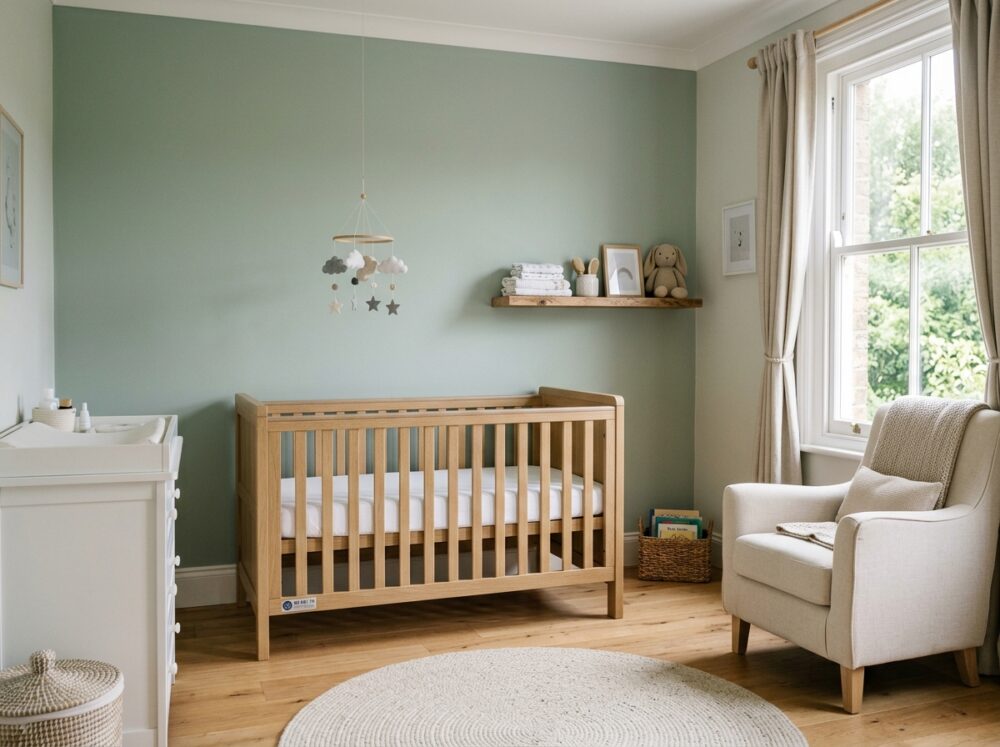
When selecting a cot, ensure it conforms to British Safety Standard BS EN 716. Cot bars should be smooth, securely fixed, and spaced between 4.5 cm and 6.5 cm apart to prevent trapping small limbs or heads.
- Firmness & Fit: Choose a firm, flat mattress with a waterproof cover. When pressed, your baby’s head should sink no more than a few millimetres, and there must be no gaps larger than 2 cm between the mattress edge and cot frame.
- Preventing SIDS: In accordance with safe sleep guidelines, eliminate cot bumpers, duvets, pillows, and soft toys during sleep hours. Soft or bulky bedding significantly increases Sudden Infant Death Syndrome (SIDS) risks. Use lightweight cellular blankets tucked securely under shoulder height or a fitted baby sleep bag.
Open Storage for Fast Transitions
In a nursery, organisation requires speed and simplicity:
- Lidless Bins & Wall Shelving: Position lidless baskets on or beneath changing tables to grab nappies with one hand safely.
- Adaptable Wall Shelves: Install floating wall shelves near nursing chairs to hold bottles and wipes today; repurpose them later for picture books and toy displays.
2. Stage 2: Fostering Independence (3–7 Years)
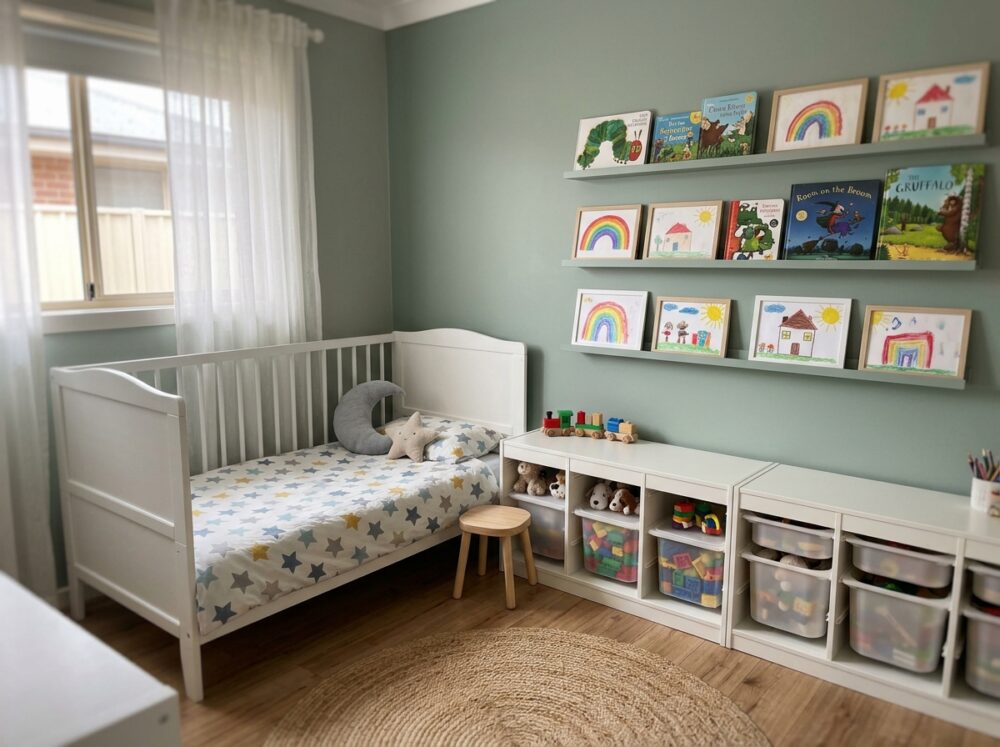
Transitioning from a cot to a first bed usually occurs between 2 and 3 years of age, marked by milestones such as climbing out of the cot or showing readiness for toilet training.
Timing Tip for Siblings: If a new baby is expected, transition your older child to their new bed either three months before the birth or wait until two months after to prevent feelings of displacement.
Selecting the First Bed
- Floor Mattress: Minimises fall risks and fosters confidence in younger toddlers.
- Toddler Bed: Utilises the same dimensions as a standard cot mattress (typically 140 cm x 70 cm), allowing existing fitted sheets to be reused.
- Standard Single Bed (90 cm x 190 cm): Offers long-term longevity. Add removable, breathable mesh bed rails to safeguard against midnight rolls.
Cognitive Development & Toy Rotation
Children can experience visual overwhelm when faced with excessive options. Studies in child psychology suggest that children engage more deeply when presented with a curated selection of roughly 12 active toys at a time.
- Toy Rotation System: Store two-thirds of play items out of sight and rotate themed batches every fortnight (e.g. building blocks, roleplay, creative arts).
- Low-Level Accessibility: Mount wall pegs, canvas totes, and picture ledges at your child’s eye level to encourage independent tidying.
3. Stage 3: Multi-Functional School Years (7–12 Years)
As primary school brings homework, expanding hobbies, and creative collections, the bedroom must support distinct zones for focus, rest, and play.
Primary Zone Division
| Rest & Recovery Zone | Focused Workspace | Creative Display |
|---|---|---|
| • Single / Mid-Sleeper Bed• Floor space kept clear | • Ergonomic desk away from bed• Direct LED task lighting | • Pegboards & magnetic strips• Trophy & achievement cases |
Creating an Ergonomic Work Area
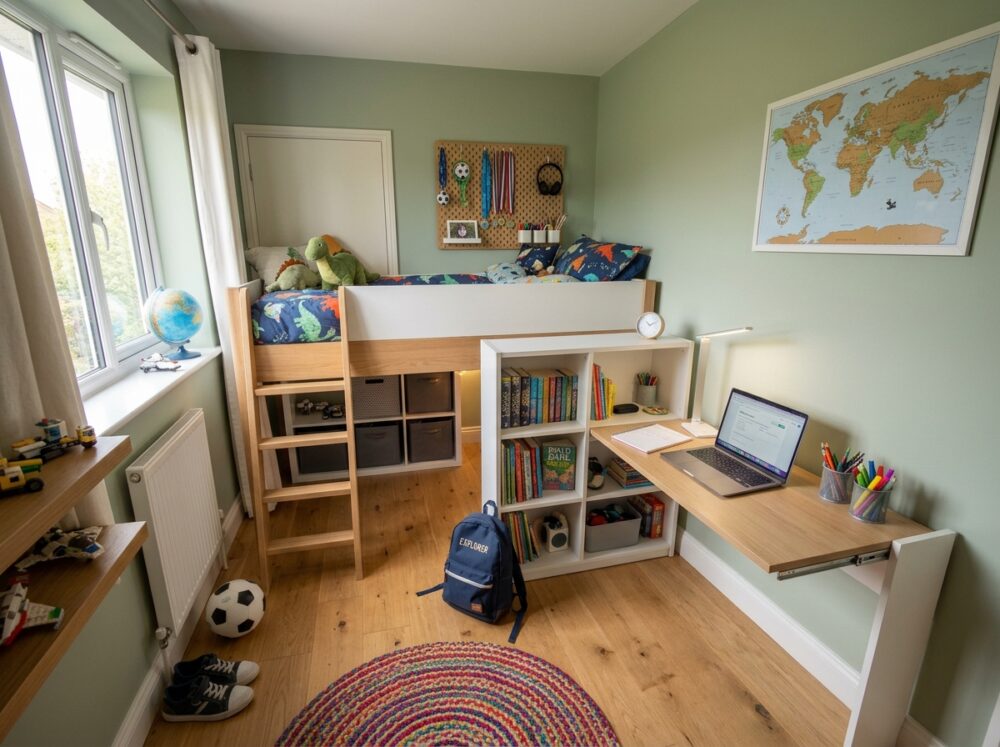
Where homework happens directly impacts concentration. Position the study desk away from the bed to create a clear psychological separation between work mode and sleep mode.
- Task Lighting: Incorporate adjustable LED task lamps with cool-white light to maintain focus without creating glare across screens or books.
- Floor Space Optimisation: Use mid-sleeper beds with integrated desks underneath to double usable floor area in compact bedrooms.
4. Stage 4: The Teen Sanctuary (12+ Years)
Teenagers spend up to 9 hours a day on digital media, with their bedroom acting as a social hub, study zone, and personal retreat.
Upgrading Bed Sizes & Storage
Standard single beds are often outgrown during adolescent growth spurts:
- Small Double Beds (120 cm x 190 cm): Provide additional sleeping width for growing teens without overwhelming compact room footprints.
- Ottoman Storage Bases: Gas-lift ottoman frames eliminate the “floordrobe” by offering full-footprint hidden storage for sports gear, coats, and extra bedding.
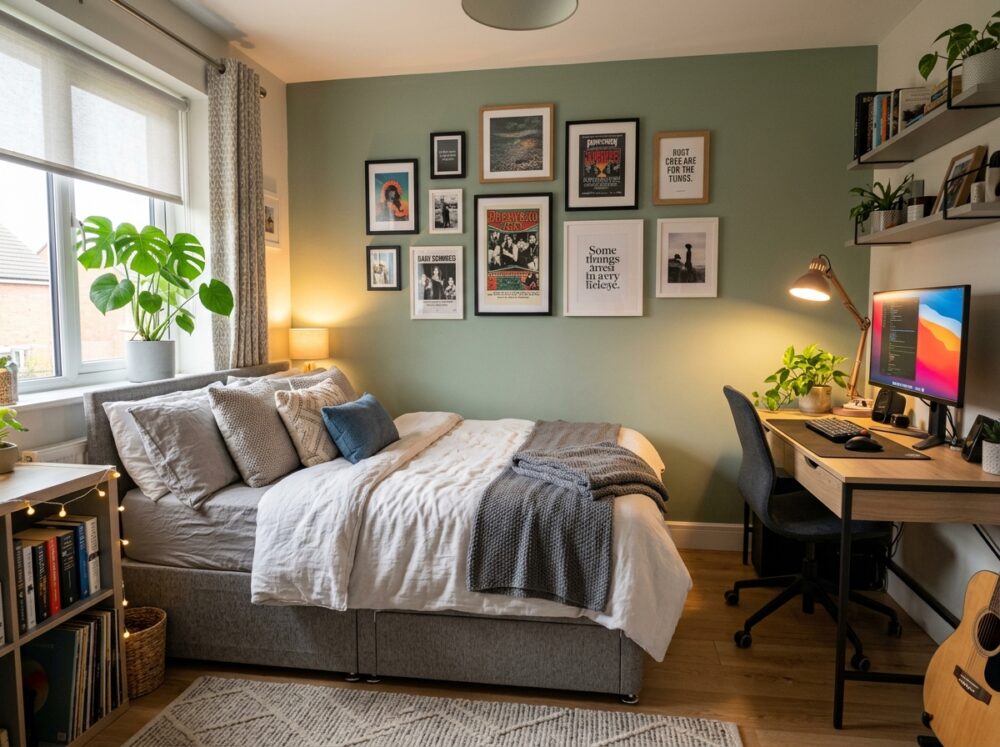
Upgrading to Bedstar small double beds provides extra sleeping width for growing teens while leaving room for desk setups and wardrobe storage.
Managing Technology and Sleep Hygiene
Blue spectrum light emitted from screens suppresses melatonin release, disrupting adolescent sleep cycles.
Digital Hygiene Tip: Establish a charging station in a communal family space (such as the kitchen) overnight to encourage screen-free bedrooms before sleep.
Conclusion: Building a Room That Grows
Designing a successful child’s bedroom does not require complete redecoration every few years. By investing in adaptable core furniture—such as convertible cots, modular shelving, and storage beds—and maintaining neutral wall foundations, you can effortlessly adapt the space as your child grows.