
We spend approximately one-third of our lives asleep, yet for many of us, the bedroom is a design afterthought. A place to store laundry or scroll through emails until we drift off. But true rest isn’t just about the hours you spend horizontal; it’s about creating an environment where your nervous system feels safe enough to fully switch off.
If you’re waking up feeling like you’ve gone twelve rounds in a boxing ring, it’s time to stop looking for ‘hacks’ and start looking at your foundation. Here is how to build a space that doesn’t just look like a dream, but feels like one.
1. The Foundation: Choosing the Best Bed for Your Space
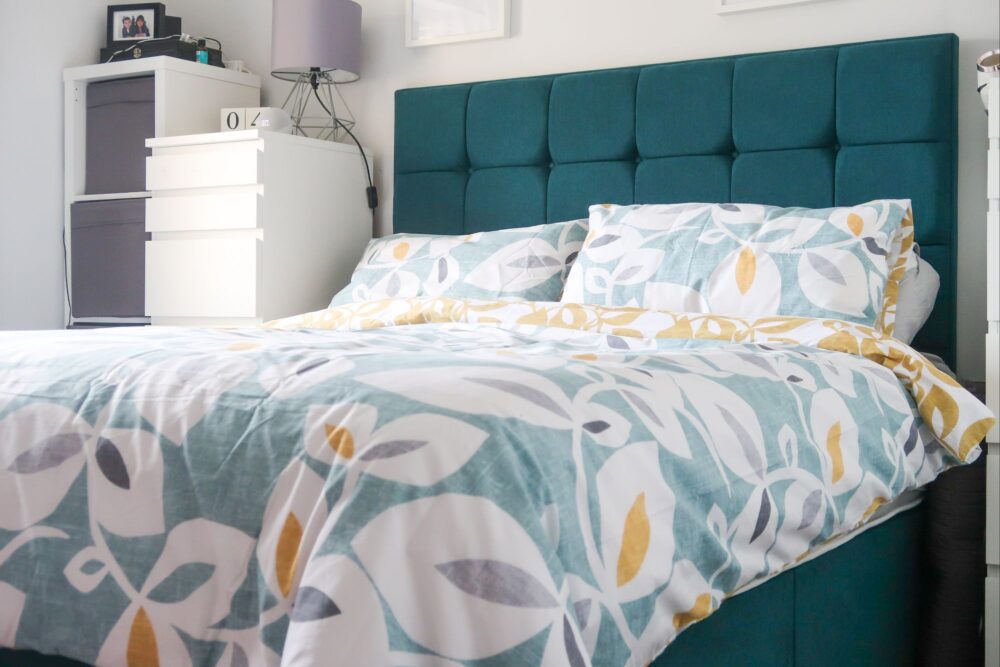
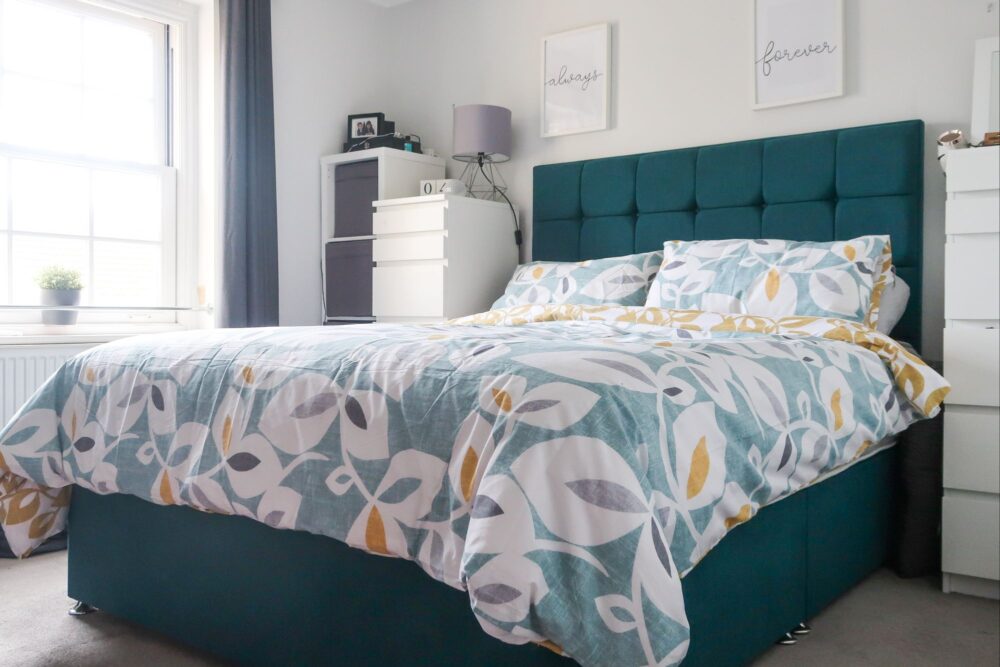
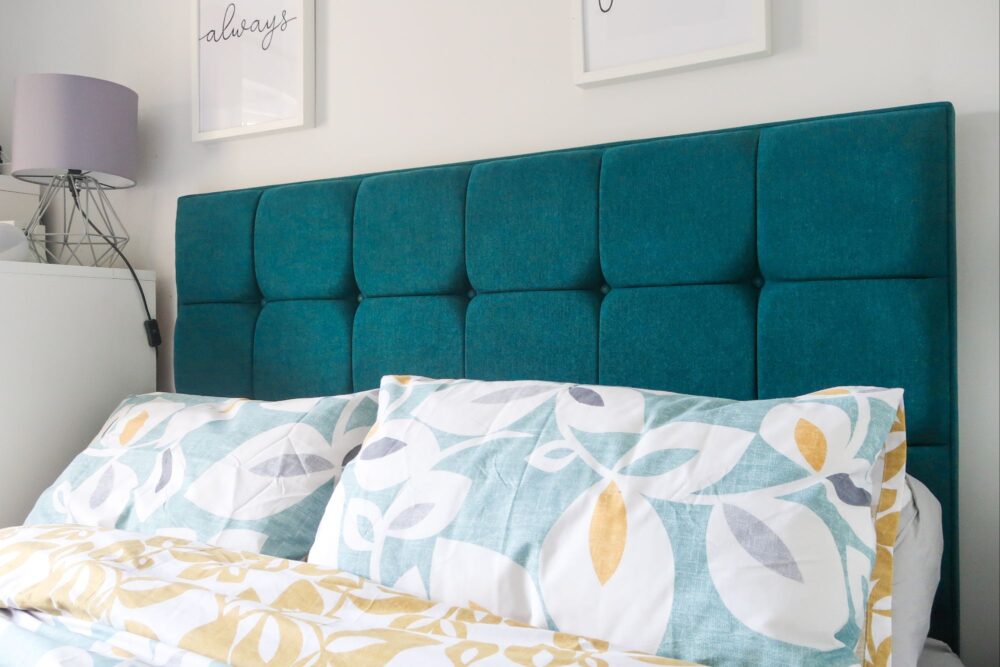
The ‘best’ bed depends on the size of your bedroom, your storage needs, and your personal style. While a bed is a practical piece of furniture, it doesn’t have to be boring; a pop of colour, like a deep teal, can instantly brighten a room and shift the energy from ‘utility’ to ‘sanctuary’.
The Divan: The Space-Saving Specialist
A divan is a sturdy, upholstered bed base on which the mattress sits flush against its edges.
- The Blueprint: Because there is no extra ‘lip’ or frame, it has the smallest possible footprint.
- Best For: Narrow rooms where every inch of floor space counts. It’s the secret weapon for fitting a King-sized bed into a smaller room without it feeling cramped.
The Ottoman: The Storage Powerhouse
Using gas-lift hydraulics (similar to a car boot), the entire mattress lifts, revealing a massive, hollow compartment.
- The Blueprint: 100% of the bed’s footprint becomes usable storage.
- Best For: Apartment living or hiding away seasonal clutter like suitcases and heavy winter coats. Keeping clutter out of sight is scientifically proven to lower cortisol levels before bed.
The Bed Frame: The Aesthetic Classic
The traditional slatted frame (wood or metal) offers a decorative perimeter and a more open feel.
- Airflow: The open underside allows for maximum ventilation, which is vital for keeping a mattress fresh and cool.
- Best For: Larger rooms where you want to make a style statement and don’t need the extra under-bed storage.
2. The Mattress: Your Spine’s Silent Partner
You can have the most beautiful silk sheets in the world, but if your mattress is saggy, your sleep quality will suffer. A supportive mattress is responsible for spinal alignment. When you sleep, your muscles finally relax, leaving your spine entirely dependent on the mattress for support.
- The Goal: A supportive mattress should keep your spine in a neutral, straight line, just as it would look if you were standing with perfect posture.
- Pressure Relief: A high-quality mattress (like those from Simba Sleep) uses layers to distribute your body weight evenly, preventing ‘hot spots’ on your hips and shoulders.
3. The ‘Before You Buy’ Checklist
Buying a mattress is a ten-year commitment to your health. To ensure you aren’t just buying a ‘cloud’ that turns into a ‘hammock’ after six months, ask yourself these five critical questions:
- What is my primary sleeping position? Side sleepers need a ‘medium-soft’ feel to cushion joints; back and stomach sleepers need ‘medium-firm’ support to prevent the spine from bowing.
- Do I ‘sleep hot’? Avoid pure, dense memory foam, which traps heat. Look for breathable hybrids or natural materials like wool and cotton that wick away moisture.
- Does my partner’s movement wake me up? Look for ‘Motion Isolation‘, usually found in pocket-sprung or hybrid mattresses, where each spring reacts independently to weight.
- Does the brand offer a ‘Home Trial’? Your body needs 21–30 days to adjust to a new support level. Aim for a brand that offers at least a 100-night trial.
- Is my current base compatible? Check your slat distance. For most modern foam/hybrid mattresses, slats should be no more than 7cm apart to prevent sagging and warranty issues.
4. Lifestyle Tweaks: Biohacking Your Rest
A great bed provides the opportunity for sleep, but your habits determine if your body takes it.
- The 18°C Rule: Your body must drop its core temperature to initiate sleep. Keep your bedroom cool; around 18°C is the ‘Goldilocks’ zone for uninterrupted REM sleep.
- Light Hygiene: ‘Cool’ blue light from LEDs and phones suppresses melatonin. Two hours before bed, switch to warm-amber lamps and toggle your phone to ‘Night Shift’ mode.
- The 10-3-2-1 Formula: * 10 hours before bed: No more caffeine.
- 3 hours before bed: No more heavy meals or alcohol.
- 2 hours before bed: Close the laptop and stop working.
- 1 hour before bed: No more screens. This is your ‘Golden Hour’ for reading or stretching.
5. The Finishing Touches: The Luxury Suite Feel
Complete your sanctuary with these high-impact accessories:
- Blackout Blinds: Total darkness is a non-negotiable for deep repair. Even a sliver of streetlight can disrupt your rhythm.
- Silk or Bamboo Pillowcases: These are naturally thermoregulating (cool to the touch) and reduce friction, preventing morning skin creases and hair breakage.
- Soundscapes: A white- or brown-noise machine creates a consistent ‘sonic wall’ that masks disruptive sounds like snoring or traffic.
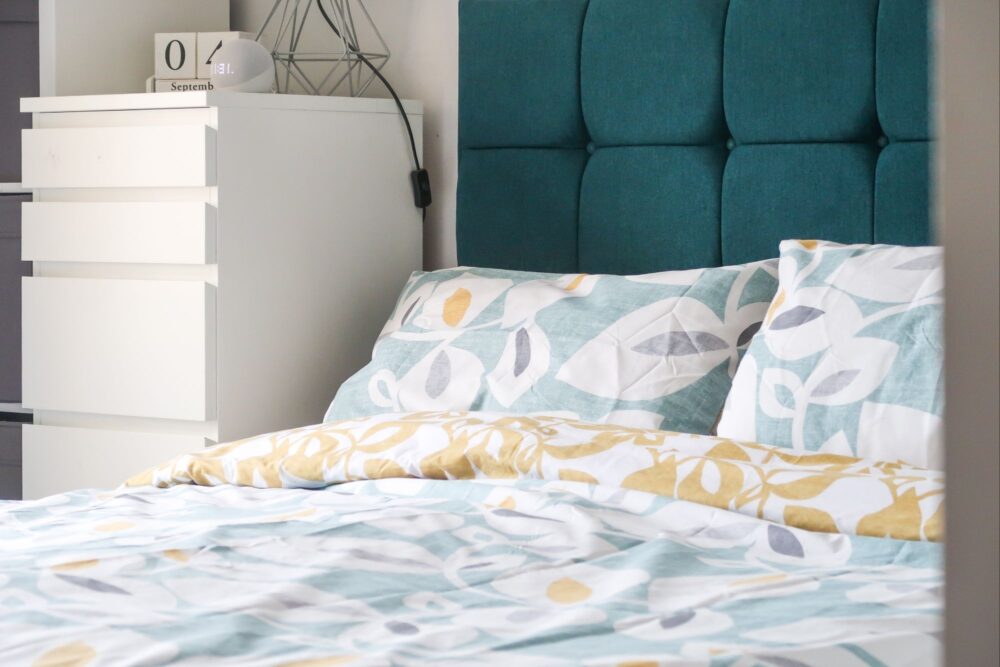
- Non-Digital Alarm Clock: Move your phone to another room. A sunrise alarm clock that mimics a natural dawn lets you wake up through light receptors rather than a jarring ‘beep’.
Conclusion: Investing in Your Future Self
Upgrading your bedroom is an act of self-care. Whether you choose a vibrant teal Simba Sleep bed for a pop of joy or focus on perfecting your 10-3-2-1 countdown, you are securing a foundation for better mental clarity and physical recovery. Tonight, don’t just ‘go to sleep’, invest in a recovery experience that leaves you ready to take on the world.
