
There’s a particular brand of chaos that comes with a three-year-old and a woodland walk. Mine treats every stick, snail and puddle as a pressing mystery, and lately her favourite word – after “why” – has been “what’s that called?” So when I started thinking about introducing a second language before school age, I didn’t want flashcards or a screen she’d zone out in front of. I wanted something that met her where she already was: nose to the world, asking questions. Dex Camera turned out to be exactly that.
What is Dex Camera?
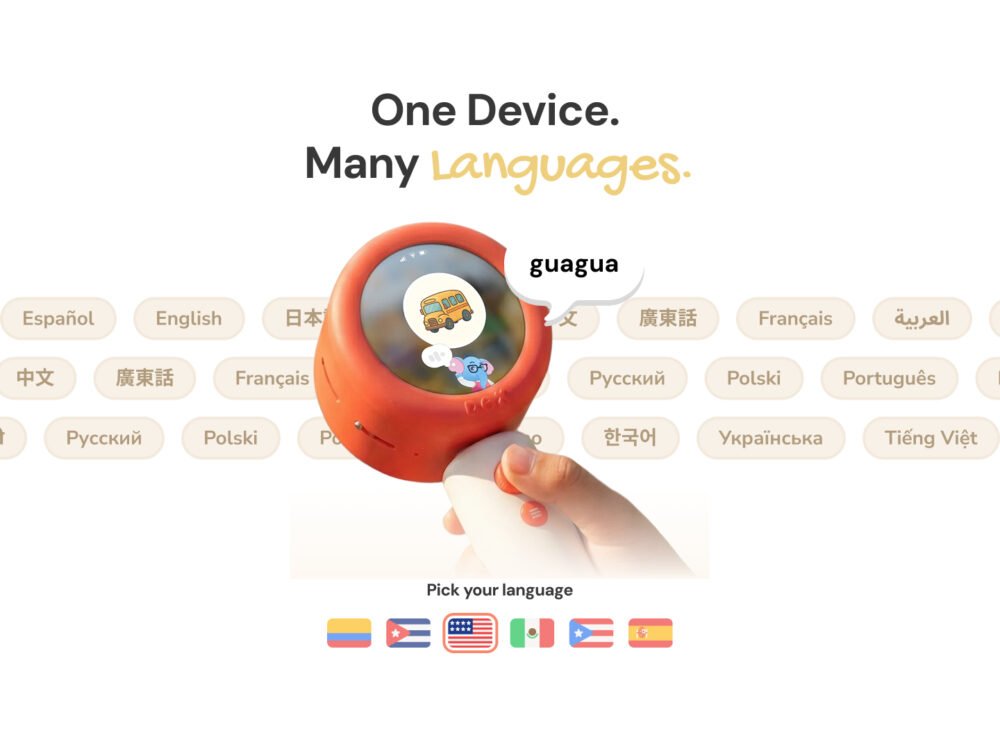
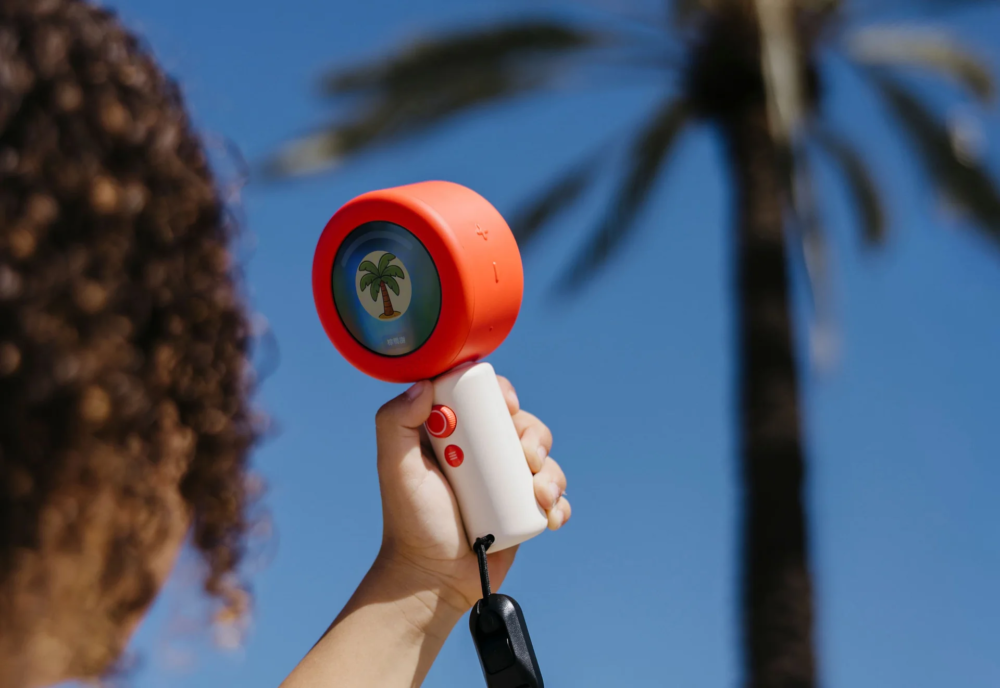
Dex Camera is a small, sturdy, child-sized camera built to turn real-world curiosity into bite-sized language lessons. A child points it at something – a leaf, a bus, a bowl of strawberries – snaps a photo, and Dex recognises the object, then spins up a short, playful mini-lesson in whatever language they’re learning. After the lesson, it gently invites them to say the word back. It’s audio-first, with a small blue-light-filtered screen, and it’s designed for ages roughly 3 to 8.
What I love about the positioning is that it’s neither a smartphone nor a strict “no screens” rule. It’s a third option: a purpose-built tool that uses a child’s interest in the real world as the launchpad for a language moment.
Who is it for?
Honestly, any parent or carer who wants to sprinkle a little language exposure into everyday life. It’s brilliant for preschoolers who are too young for formal lessons but old enough to point, recognise and repeat. It also suits bilingual or multilingual families, and anyone raising a child in a language that isn’t the local one. If your little one is endlessly curious and you’d like that curiosity to double as learning, it’s a natural fit.
How we got on
The first time we used it, my daughter spotted a neighbour’s cat sunning itself on a wall. She pointed the camera, it clicked, and a moment later Dex cheerfully named the cat in Spanish – “el gato” – with that little reward ding that three-year-olds find utterly delightful. Her whole face lit up. We spent the next ten minutes pointing at everything in the garden, and by the end she was proudly shouting “la flor! la flor!” at a daffodil. That, to me, is the magic: it doesn’t feel like learning. It feels like a game we’re playing together.
Core features worth knowing
- Adaptive lessons that pace themselves to your child.
- Story Time, which folds language into a gentle narrative.
- Parent-made Scavenger Hunts – we made one for our local park, and it turned a usual walk into a tiny adventure.
- Pronunciation support, so they hear and repeat the word correctly.
- Reward stickers and sounds that keep motivation high without sugar or screens.
Languages and dialects – the real wow
This is where Dex pulled ahead of anything else I’d looked at. It supports 16 languages and 30+ dialects, across beginner, intermediate and advanced levels. For a multilingual family that’s huge: you can pick Spanish as spoken in Mexico or Spain, Mandarin for Mainland China, Taiwan, Malaysia or Singapore, French for France, Canada or Haiti, and more. It genuinely meets your family where your heritage actually lives.
Privacy and safety
As a parent, this was my first question. Dex’s stated policy is reassuring: it’s COPPA-compliant and built for children’s data, it does not retain children’s photos or voice recordings, it doesn’t use children’s information for marketing, and parents stay in control of what they choose to save. Safety filters block inappropriate content. I’d always describe these as Dex’s stated policy rather than my own guarantee – but for a device aimed at preschoolers, it’s clearly been thought through.
Pros
- Turns everyday moments into language practice
- Genuinely fun for young children
- Huge language & dialect range
- Strong, child-first privacy stance
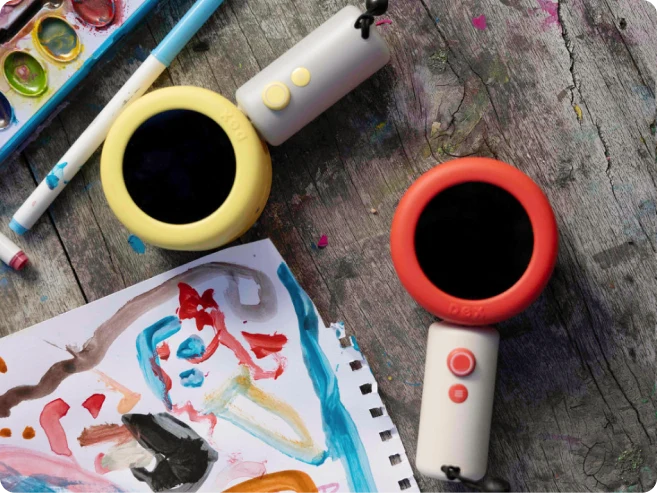
- Sturdy and easy for small hands
- Builds confidence and independence as children lead their own learning
- Dex makes language learning feel natural, not forced – rather than memorising vocabulary from a worksheet or list, children pick up words in the moment they’re curious
Cons
- Small learning curve for parents setting up hunts
- A considered purchase, not a pocket-money toy
The verdict
At $249 USD (regional pricing applies), Dex Camera isn’t the cheapest plaything on the shelf – but it’s not a toy, it’s a learning companion. For a preschooler whose favourite word is “what’s that?”, it’s one of the few things I’ve found that feeds curiosity instead of flattening it. If you want language learning to feel like play, this is worth a serious look.
Dex Camera Frequently Asked Questions (FAQs)
What age is Dex Camera for?
Roughly 3 to 8, though older kids often enjoy it too.
Can it support more than one language?
Yes – 16 languages and 30+ dialects, and you can switch or combine them. Does it need a subscription?
The core camera and starter activities work without one; optional plans (around $9.99 or $19.99 a month) unlock more content, custom hunts, stories and LTE use.
Is it safe for young children?
Dex states it’s COPPA-compliant, doesn’t retain children’s photos or voice, and gives parents control. Always treat privacy claims as Dex’s stated policy.
Is Dex Camera worth it?
If language-through-play fits your family, yes – especially for curious preschoolers.
Dex Camera 10% Discount Code
Curious to try it with your own little explorer? Find Dex Camera here: https://www.dex.camera/?utm_source=website&utm_medium=KOL&utm_campaign= Boo. Use my code “10Boo” for an extra 10% discount.