
A healthy backyard pond looks effortless from the outside. Clear water, calm fish, and plants that seem to take care of themselves. But that calm is not an accident. Every balanced pond runs on three things working together: the right number of fish, enough plants, and steady water movement.
When one of these falls out of line, the whole pond feels it. Usually that shows up as green water, stressed fish, or a pond that needs constant cleaning no matter how often you work on it.
Why Balance Matters More Than Equipment
It is easy to think a bigger filter or a stronger pump will fix every pond problem. Sometimes it helps. But equipment alone cannot replace a working ecosystem.
A pond is a living system. Fish produce waste. That waste feeds bacteria and plants. Plants clean the water. Moving water carries oxygen and nutrients to everything that needs them. When these pieces support each other, the pond mostly runs itself.
Think of it like a small budget. Nutrients come in through fish waste, leftover food, and decaying plants. They need to go back out through plant growth, bacteria, and filtration. If more comes in than goes out, algae takes over fast.
How Many Fish Is Too Many
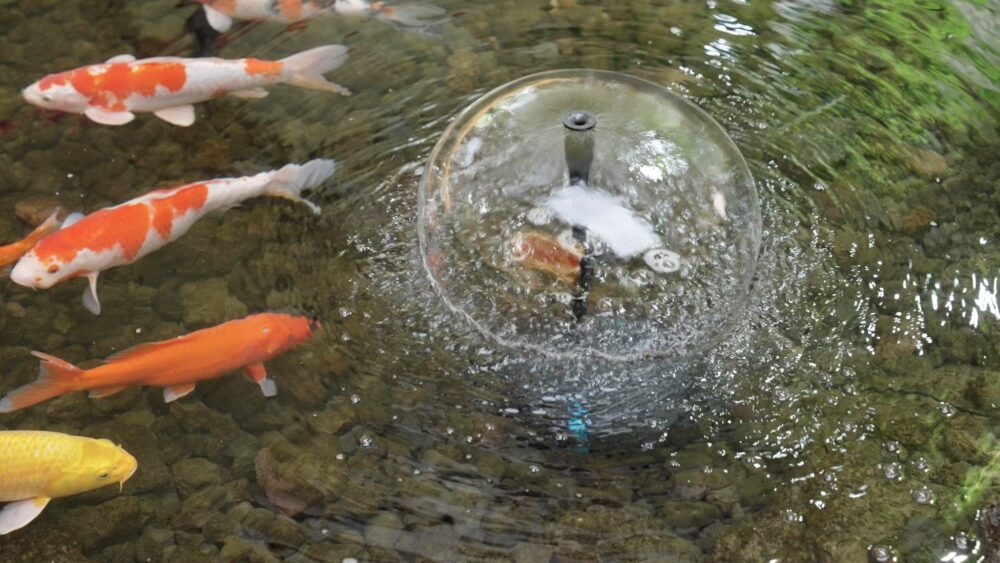
Overstocking is one of the most common reasons ponds struggle. Fish are the biggest source of nutrients in the water, and even a few extra fish can push a small pond out of balance.
A simple guideline works well here. Allow about one inch of fish for every two square feet of surface area during the first year. This gives your pond room to handle waste without overwhelming your filtration.
Fish also grow fast. A three inch koi can reach over a foot within a few years. Always plan your stocking around adult size, not the size fish are when you bring them home.
Feeding Habits Matter Too
Only feed what your fish can finish in three to five minutes, once or twice a day. Leftover food breaks down in the water and quietly adds nutrients that feed algae.
During spring and fall, water temperatures swing a lot. Feed lightly during these seasons. Fish metabolism slows down in cooler water, so extra food just sits and decays instead of getting eaten.
Letting Plants Do the Real Filtering
Plants often get treated as decoration, but they are actually the hardest working part of a pond. They absorb the same nutrients that feed algae, which means every plant you add is competition algae has to fight for food.
Aim for plant coverage across roughly forty to sixty percent of your pond’s surface. This range gives algae very little room to grow while still leaving open water for fish to swim and light to reach submerged plants.
Too little coverage and algae takes over. Too much coverage and you start blocking oxygen exchange at night.
Mixing Plant Types Works Best
- Submerged plants like hornwort sit below the surface and pull nutrients straight from the water while adding oxygen during the day.
- Floating plants such as water lettuce shade the surface and soak up nutrients fast, which makes them especially useful in ponds with more fish.
- Marginal plants along the edges add filtering power and give fish shelter from predators and harsh sun. Combining these types covers far more of the pond’s nutrient load than relying on just one kind.
One more thing people miss: trimming matters. Nutrients only leave the pond once you physically remove plant trimmings. Letting cuttings decompose in the water just returns everything right back into the system.
Why Water Flow Ties Everything Together
Fish stocking and plant coverage only work well when the water itself is moving. Circulation carries oxygen to fish, delivers nutrients to plant roots, and stops waste from settling and rotting in one spot.
Without movement, ponds develop dead zones where oxygen drops, even if fish numbers and plant coverage look fine on paper.
Solar Fountain Pumps Keep Water Active
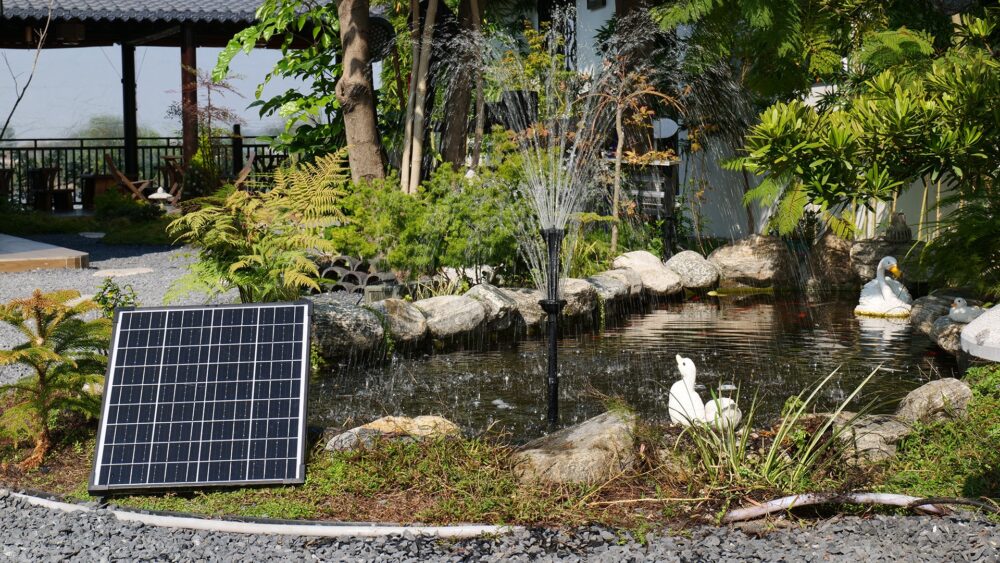
A solar fountain pump is one of the easiest ways to keep water moving without adding to your electric bill or dealing with extra wiring. As water sprays and falls back into the pond, it picks up oxygen along the way, which supports both fish and the beneficial bacteria that break down waste.
Poposoap’s solar fountain pump lineup is built for exactly this kind of steady, natural circulation.
Pairing Flow With Filtration
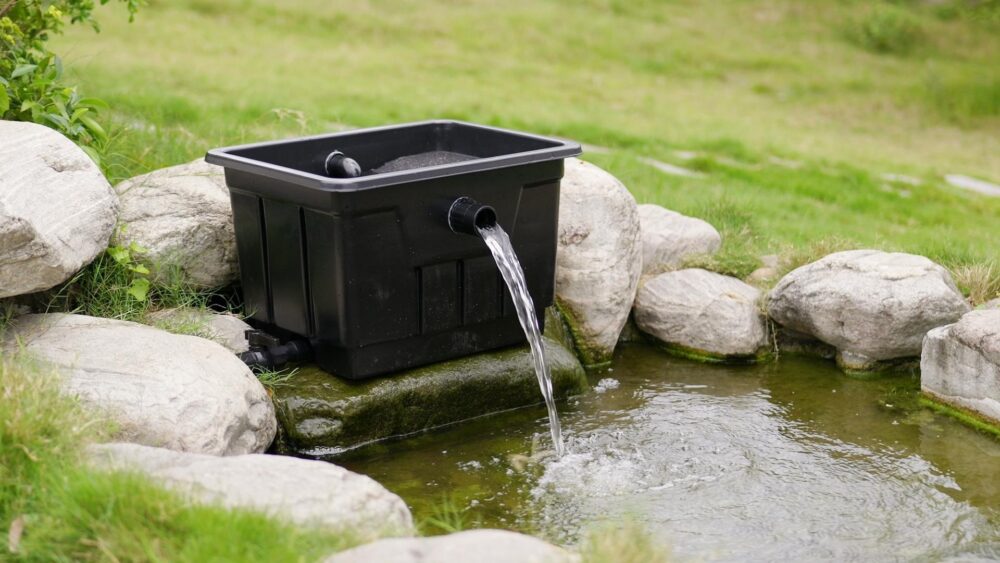
For ponds that also need mechanical cleaning power, pairing that movement with a pond filter helps trap debris and process ammonia before it builds up.
Pond filter systems are designed to work alongside circulation, not against it, so water stays clear as it moves.
As a general rule, aim to turn over your entire pond volume once every one to two hours. A 500 gallon pond, for example, does well with a pump moving somewhere around 250 to 500 gallons per hour. Keep the pump low in the pond so it draws water from the bottom, since that is where waste tends to settle.
Bringing It All Together
None of these three pieces work alone. A pond with strong flow but too many fish will still struggle with nutrient buildup. A pond with plenty of plants but no movement will develop stagnant pockets where oxygen runs low.
The real formula is balance across all three areas at once, adjusted to fit your pond’s size and how much sun it gets.
Start by checking your fish load against your pond’s surface area. Then look at how much of that surface is covered by plants. If algae keeps coming back no matter how often you clean, the real issue is usually too many nutrients and not enough plants or flow to handle them.
Final Thoughts
A balanced pond is not about constant maintenance. It is about setting up fish, plants, and water flow so they naturally support each other.
Once that balance is in place, algae becomes rare, fish stay healthier, and the time you spend maintaining your pond drops fast. Pay attention to how these three pieces interact, make small adjustments as you go, and your pond will settle into the kind of quiet, low effort rhythm every pond owner is really after.